Chicken meal
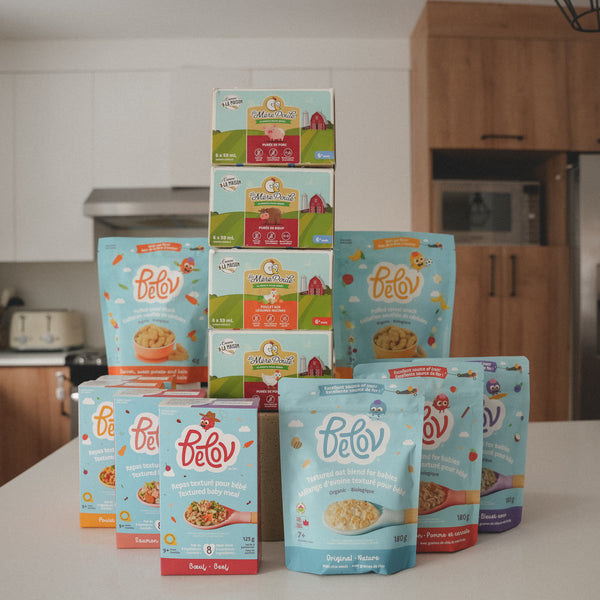
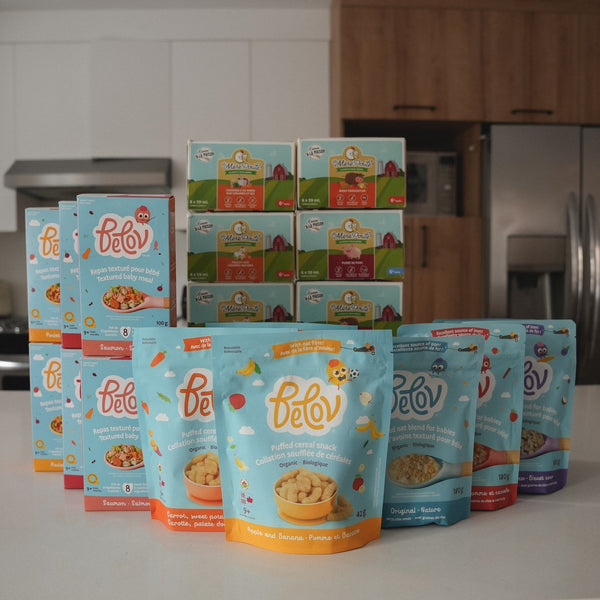
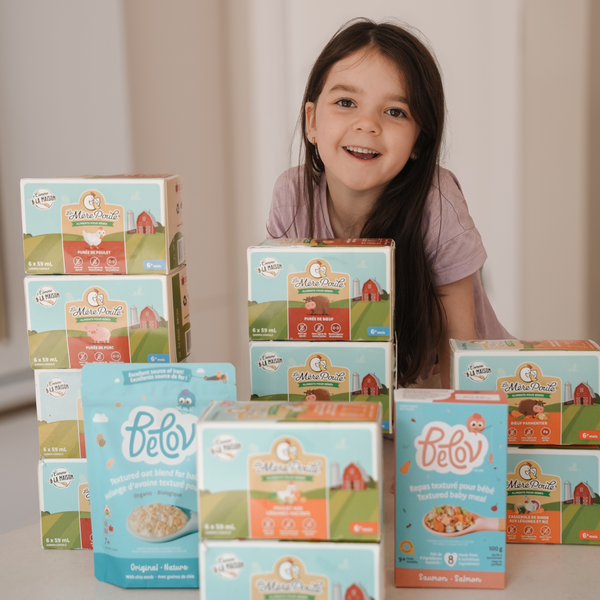
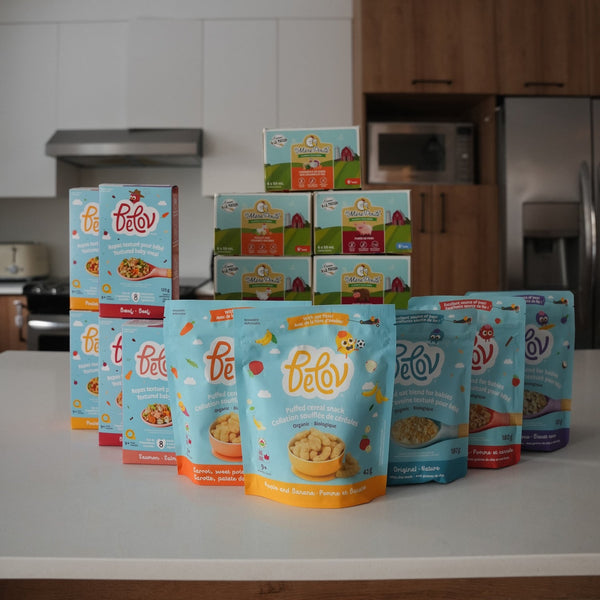
🌟🇨🇦 Adopted by thousands of Canadian families
Our most colourful meal yet! Red chillies, green peas, all served with millet: a source of fibre that acts as a wheat substitute, making it ‘gluten-free’! The chia seeds in this recipe provide fibre that supports little tummies’ digestive health. A pinch of turmeric to add a pop of colour to the meal, as well as all its nutritional benefits! The result: a meal that’s absolutely DELICIOUS, both in taste and appearance.
- Between 2 and 4 portions depending on the baby's age and appetite
- Made with 8 nutritious ingredients
- No artificial flavours or preservatives
- Good source of iron
Just like Mom's (or Dad's!) home-cooked meals
- A complete, textured, and nutritious meal bursting with flavour and color.
- Frozen and ready to be reheated
- Designed to support your baby's development from 9 months onwards.
- Serve pureed, mashed, or in pieces, according to preference.


Healthy  and nutritious
  meals and snacks for your little ones


Cooked millet seeds

Bell pepper

Green peas

Turmeric
Cooked millet seeds
Bell pepper
Green peas
Turmeric
Already loved by thousands of Canadian families.


Method

Stove
Recommended
Microwave
- Always stay close to the baby while feeding.
- Note that it is important to have introduced the different allergens individually first before offering meals containing a variety of ingredients.
- It is possible to substitute the water with any other binding agent without added sugar or salt, according to the baby's preference: broth, sauce, vegetable puree.
FAQ
Why do you suggest adding water when cooking meals?
This suggestion has been added to the stovetop cooking instructions to prevent the meal from sticking to the bottom of the pan. In fact, when the ingredients defrost, the surface in contact with the bottom of the pan could easily BURNT! Baby may not be able to speak, but they will certainly let you know they're not happy if you serve them a burnt meal! By adding water, the ingredients can gently defrost and then simmer to provide baby with a smooth and delicious meal. 😊 As suggested on our packaging, you can even substitute the water with any other thickening agent: stock, sauce, vegetable puree, etc. The choice should obviously be free of added salt and sugar! Also, parents who decide to introduce our meals before 9 months can make it easier to manage the different textures by adding a larger quantity of the chosen thickening agent or even mashing the meal with a fork or puréeing it. Regarding microwave preparation, adding a binding agent is optional, depending on the microwave's power and, of course, your baby's ability to handle the pieces as they are or to prioritize a different texture (mashed or puréed). For example, if you want to offer the meal mashed, adding water or another binding agent will give you a smoother texture! The important thing to remember is that as a parent, YOU are the BEST OBSERVER of your little one 😊 Every child is unique, and so is their development. Introducing new textures can be a worrying step for parents, so it's better to be overly cautious! If you want to gradually offer your baby grainy textures and eventually transition to pieces without a binding agent, that's perfectly fine too! Let's remember that the most important thing isn't the method or the texture, but rather that your baby gets all the essential nutrients for their healthy development!
Why do you recommend cooking on the stovetop rather than in the microwave?
We prefer cooking on the stovetop for several reasons! First, we learned about the toxicity of certain materials when heated. More specifically, although some plastics are advertised as "microwave-safe," particle migration can still occur… It's all quite complex, so for the next part, we're putting on our super-scientist hats!! There are several types of plastic, and each has its own specific melting point. However, even if the melting point of a plastic, for example PET, is 255°C, the particles that compose it become agitated when heated. How can you heat plastic at home? It's quite simple, dear parents! When we reheat food in a plastic container in the microwave, its temperature increases, causing the particles inside to become agitated, which can lead to these particles migrating into the food. Not very SHARP, let's be honest… Given that this information isn't readily available to the general public (we practically had a chemistry lesson to understand all this, haha), we prefer to rely on stovetop cooking. This way, we avoid contributing to increased exposure to plastic particle migration in baby food. HOWEVER!!! If you use a glass or porcelain container to reheat baby food in the microwave, don't worry, there's no potential for particle migration with these materials 😊 Secondly (and much less complicated), we prefer this method of preparation for the final result it produces! Indeed, the food will have simmered gently over low heat for a few minutes, resulting in an unparalleled harmony of flavours! What's more, you'll find that the aroma is all the more amplified and oh so pleasant for anyone who gets a good whiff of our meals!! Maybe it's just us, but using a small saucepan and stirring a few times while cooking gives us the feeling of having spent hours preparing this delicious baby meal. IT'S LIKE A REWARD!! Keep it simple 😉
Up to what age can I offer your meals?
The target age for our products is 6 to 24 months. This period includes the introduction of complementary foods and extends to the end of the crucial first 1000 days of life (including the duration of pregnancy). This phase is critical for an individual's health and is the perfect opportunity for parents to provide all the benefits of a healthy and varied diet! Furthermore, during the first few months of a child's life, it is not recommended to add salt or sugar to their meals (WHO, 2009), and our products are aligned with this. Hooray! On our packaging, the recommended introduction age is indeed 9+ months, but the texture can be adapted for early introduction (refer to the question "At what age can I start offering your meals to my baby?"). In reality, our products can also support the nutritional needs of young children, and indeed even those of an adult. YES, YES! Of course, we're aware that our products are a tad too small for an adult! However, we encourage you to taste the "Belov" difference; you'll be pleasantly surprised by the quality and flavour of our products. We promise, and neither you nor your baby will turn up your nose! Consult your doctor to confirm the introduction of complementary foods and your baby's nutritional needs.
Why is texture emphasized in each of your product lines?
First and foremost, our greatest desire is to be your everyday NINJA ally. In other words, to support you as a parent for as long as possible and not leave you unprepared by offering a solution that becomes outdated too quickly! To be a daily nutritional ally, we felt it was essential to offer products that would be suitable for your baby as early as possible in their development and that would continue to meet their ever-changing nutritional needs. Therefore, rather than opting for pureed meals, we focused on TEXTURED MEALS! That being said, it's true that everyone has their own preferred texture; there's no accounting for taste, as they say! Our intention is to offer nutritious meals to all little ones, so the good news is: OUR MEALS ARE VERSATILE! You can offer them in their original form, in pieces, or adapt the texture according to your baby's preference and developmental stage: mashed or pureed. We can't stress this enough: every baby is unique, and it's essential to listen to their needs rather than imposing one texture or another (chunks, mashed, pureed). We highlight the word "textured" on our packaging, but in reality, we're referring to ALL textures, as long as the one chosen suits your baby 😊 Introducing different textures should be safe and enjoyable for our little ones. Regarding our oat blends, we wanted to offer babies the comforting experience of a more traditional oatmeal! What's more, Belov is committed to innovation! Putting another traditional cereal on the shelves, which we might call "powdered," wasn't aligned with Belov's mission. Our delicious blends can even be added to your baby's favourite recipes: muffins, pancakes, and more! OHH YESSS! By being fortified with iron, we help you contribute to your recommended daily intake! OHHH WOOOWWWW!
Why do you leave the skin on most vegetables in meals?
We've all heard that we should peel vegetables before eating them. This seemingly logical recommendation isn't always necessary! To understand the reasoning, we need to look at the nutritional value of vegetable skins. For most vegetables (and even fruits!), the skin is packed with micronutrients in a MUCH higher proportion than the flesh itself. In fact, vegetables (and fruits!) are composed primarily of water, some even up to 95% water. For example, the skin of an eggplant contains fiber, flavonoids, and magnesium, while the flesh is about 90% water! So, by keeping the skin on, the nutrient intake is significantly higher! That being said, it's true that for some toddlers, vegetable skins can be more difficult to manage. Therefore, it's important to be vigilant and monitor your child's developing skills to determine their ability to eat a meal with vegetables that still have their skin on. Consult your doctor before introducing vegetables with peels to your baby.
Are your meals dedicated to self-contained feeding (DME)?
Our meals are dedicated to ALL babies in Quebec, REGARDLESS of the feeding method chosen by the parent. Our goal is to offer healthy and delicious food, without categorizing children based on one approach or another. Each method has its advantages (and disadvantages!), and what is most important is that your little one receives all the essential nutrients for their healthy development. It's important to clarify that even with the baby-led weaning approach, purees are part of a baby's diet, and even with the traditional approach, finger foods are part of a baby's diet! Yes, indeed. Most of us associate baby-led weaning with finger foods and traditional feeding with purees. However, what distinguishes one method from another is whether the baby brings the food to their mouth themselves, rather than with the help of mom or dad. If a baby uses a spoon to eat yogurt or applesauce on their own, that is definitely baby-led weaning! At a few months old, he probably won't have the elegance of royalty with his spoon, but he'll be just as cute! Ultimately, don't feel guilty about taking a personalized approach! In reality, observing your baby should be the priority, and ultimately, you must adapt to him! Keep in mind that the most important thing is to ensure your baby gets all the essential nutrients for his healthy development through nutrition, which plays a key role in this! And let's not forget that iron-rich foods are essential!
How many meals does one product provide?
As mentioned in the previous question, "Have you considered offering your meals in individual portions?", it was impossible to determine a precise weight that would exactly meet the appetite of every baby. For example, a 9-month-old baby might eat 25 grams, just as a 6-month-old might. Several factors influence the appetite of our adorable little ones (plenty of examples above!). Therefore, it's your baby's appetite that will determine the number of meals per container. Even today, Flavie, who will soon be 3 years old, devours Belov every day. Yes, our meals are nutritious, even for children her age, and let's face it, dear parents, 24 hours in a day isn't ENOUGH! 😅 At her age, she sometimes eats half, sometimes three-quarters of the container, depending on her appetite!
Have you considered offering your meals in portions?
OF COURSE!! During our various tasting sessions with babies, we asked parents to measure the portion their baby ate. Our goal was to determine a specific weight so we could offer our meals in pre-defined portions! Well, dear parents, you won't be surprised to read that there's NOTHING more variable than a baby's appetite, not even the weather!! It's not just a matter of one baby's appetite compared to another. NO WAY!! The same baby can have a completely different appetite from one day to the next! This variability can be explained (among other things!) by: the amount of milk consumed during the day and night, sleep quality, the size of lunch and snacks, age, growth stage, mood, teeth, the amount of water consumed during the meal, whether the child is a big eater or not… After several brainstorming sessions, we concluded that THE optimal solution was to let the parent portion their own food for their little one. The GOOD NEWS is that our meals are easy to portion because they aren't filled with water (so they're not a block of ice!). The desired amount can be easily portioned using a spatula, spoon, or knife, to name just a few! PRO TIP: We recommend starting with a small portion and adjusting it if the amount proves insufficient. This way, food waste is avoided 😊 Don't forget to put the uneaten portion back in the freezer until the next meal!!
Your meals are said to be complete, what does this mean?
As highlighted in the 2019 edition of Canada's Food Guide, the importance of enjoying a variety of healthy foods EVERY DAY was emphasized, including vegetables and fruits, whole grains, and protein. Because we are committed to meeting the highest nutritional standards to support your little one's optimal development, we have ensured that each of these three components is present in all our meals, using proportions aligned with the guidelines and the pediatric professionals we collaborated with on the recipes. With this approach, every bite is a complete meal!
Why are there no fruits in your meals?
First of all, let's not start the tomato debate! We're well aware that tomatoes are technically fruits, but they're eaten like a fruit-vegetable, raw or cooked. As mentioned in the answer to the question, "How is it possible not to have water in your ingredient list when it's almost always an ingredient in prepared baby food?", before even starting to design the meals, we did extensive research by reviewing comments from a wide range of baby food manufacturers and retailers to validate what parents had to say about the current market offerings. We're very aware that fruit is ubiquitous in baby food products. Yet, several parents mentioned their concern about having fruit in everything offered to their babies, even in prepared meals like chicken casseroles and beef stews. Their main concern stems from the fear that including fruit in meals will encourage their baby to develop a sweet tooth. The focus should be on helping toddlers appreciate the taste of vegetables without the addition of sugar! Of course, fruit is excellent for your little one's health, but let's not forget the powerful antioxidant and nutritional value of vegetables! For these reasons, it was very important to us that our meals consist solely of vegetables, and that we encourage parents to offer fruit as a side dish at lunch, as a snack, or for dessert.
At what age can I start offering your meals to my baby?
The recommended age of introduction on our packaging, 9 months and older, is based on the normal development of a baby's oral-motor skills. That said, our meals are versatile! You can adapt the texture to suit your baby's development: puréed, mashed, or in pieces. Therefore, the age of introduction can vary depending on the texture chosen! Please note that it is important to have first introduced the different ingredients individually before offering our mixed-food meals. Consult your doctor to confirm the introduction of complementary foods to your baby.
Your meals contain a few priority allergens, have you considered this?
OH YES! Laurie herself is allergic to peanuts, tree nuts (with a few exceptions), shellfish, and previously to lentils and beef protein. To name just a few of her food allergies… The reality of allergies is part of her daily life, and she says it so often: "The only thing I don't want to pass on to my future children is my allergies!" She compares allergies to a predator that follows her everywhere she goes. Recent studies have shown that the risk of developing allergies does not decrease by delaying the introduction of allergens; quite the opposite. Studies conducted over the last decade suggest that the early introduction of allergenic foods can prevent food allergies in high-risk infants. That's why we didn't hesitate to introduce salmon, edamame (soy), beef (beef protein), chickpeas, and lentils into our recipes. Note that it is important to introduce each ingredient individually before offering meals containing a variety of foods. Consult your doctor before introducing allergens to your baby.
How is it possible that you don't have water in the ingredient list of your meals, when it's almost always an ingredient in prepared baby foods?
Before even starting to design our meals, we delved into the feedback from a wide range of baby food manufacturers and retailers to validate what parents were saying about the current market offerings. Like them, we were shocked by the ingredient lists of some products marketed as "nutritious." Many parents questioned the nutritional quality of purees and meals where water was among the first ingredients listed (the earlier an ingredient is listed, the greater its quantity relative to the other ingredients). Water is essential, we all agree, but it's not nutritious. This became an integral part of our mission: to offer meals without added water! To achieve this, we must first prioritize the well-being of your little ones! Secondly, we developed a process that allows us to obtain a consistency that is easy to swallow without compromising texture. We also made sure to add a drizzle of extra virgin, cold-pressed olive oil (after cooking, during the final stage of preparation) for unparalleled creaminess. Olive oil? Yes, did you know that lipids (or "fats") are essential for development? They're also what make us feel full. Don't worry about the quantity; it's a very small amount, as you'll see from the order of the ingredient list! Finally, as suggested by Canada's Food Guide, make water your beverage of choice :)
What is freezing?
Deep freezing is a process that maximizes the preservation of nutrients, color, taste, and aroma by bringing food to freezing point much faster than a traditional freezer. This optimizes meal preservation and allows us to offer you a convenient and worry-free solution.